Tomato Stand Fish Passage
Completed: 2026
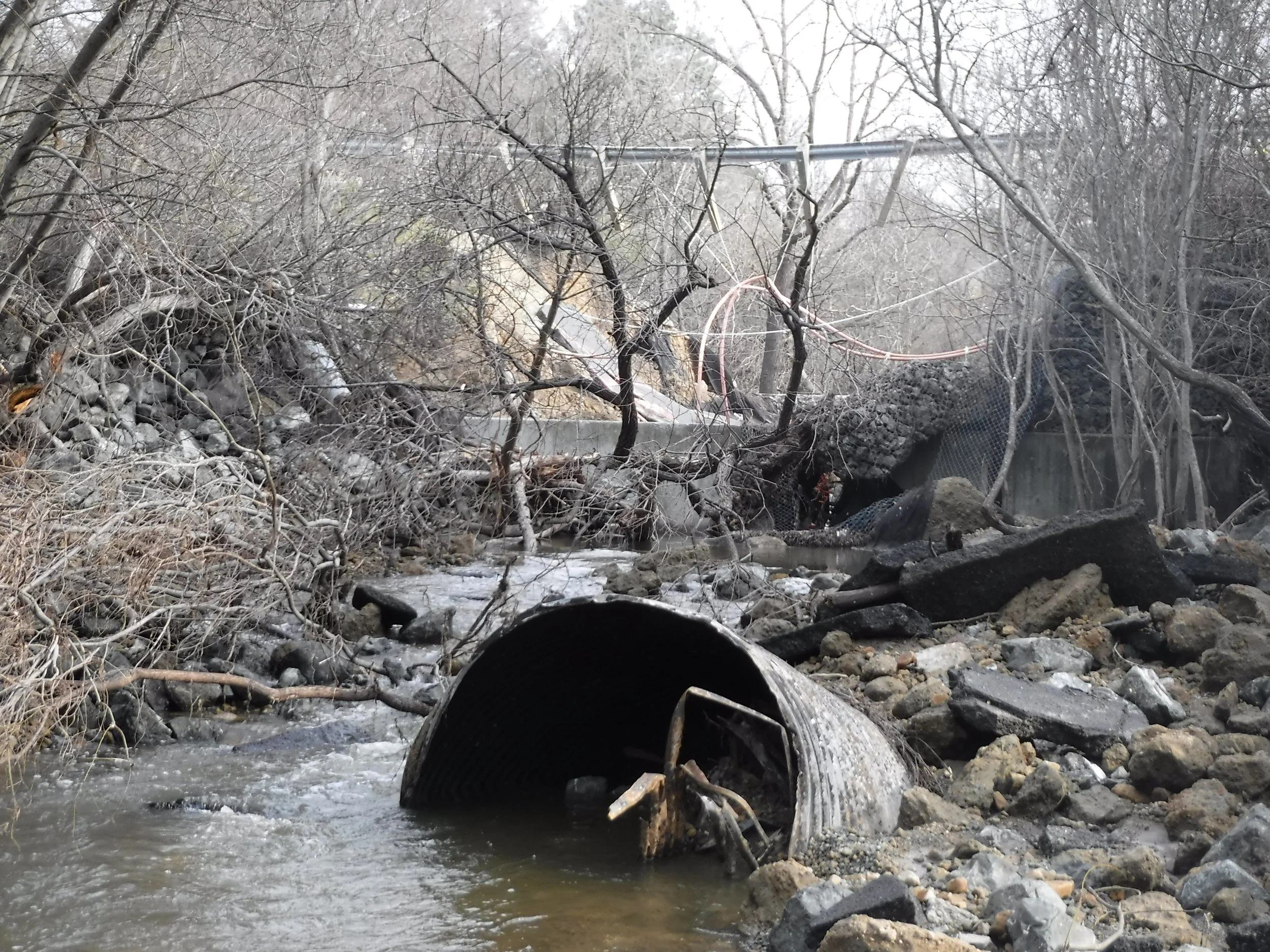
In 2017, EBMUD hired a consultant to do a fish passage analysis at the culvert. The culvert created a fish passage obstacle due to high water velocities in the culvert and the jump height for fish to get into the culvert.
In 2024, EBMUD hired a consultant, Restoration Design Group to complete the design of a fish passage project and to help get the required environmental permits.
The Tomato Stand Fish Passage project was unique in that it was completed mostly by EBMUD staff including biologists, heavy equipment operators, rangers, welders and crane operators. Many things had to be overcome including steel tariffs, permitting and scheduled vacations. The project had an estimated required construction timeline of approximately 8 to 9 weeks and had to be completed before the rainy season.
The first step of the project was to species relocation from the project site. With the species removal efforts completed dewatering of the site could continue.
During the excavation phase, there were several surprises and setbacks. We excavated and hauled off more than 80 cubic yards of junk concrete surrounding the culvert. We were hauling off the concrete to be recycled but our concrete was rejected and had to be returned to the site to stockpile until we could find a vendor to take the material.
The project was nearly shut down during excavation due a bone found in the excavation. Ultimately, tribal officials from the Lisjan Nation allowed some work to continue at the site until the bone could be identified. We had to hire an archaeologist and an osteologist to determine that this was a cow bone and we were allowed to continue.
As excavation continued, we encountered old concrete footings where our abutment footing had to go. Again, we faced potential delays. Fortunately, our EBMUD heavy equipment operators seem to have a solution or tool to everything. A 5 foot deep gravel layer was placed for the bridge abutments. 32 foot long steel h-piles were driven 30 feet into the ground in the center of the footings, leaving the piles exposed by 2 feet. Four piles were driven for each footing.
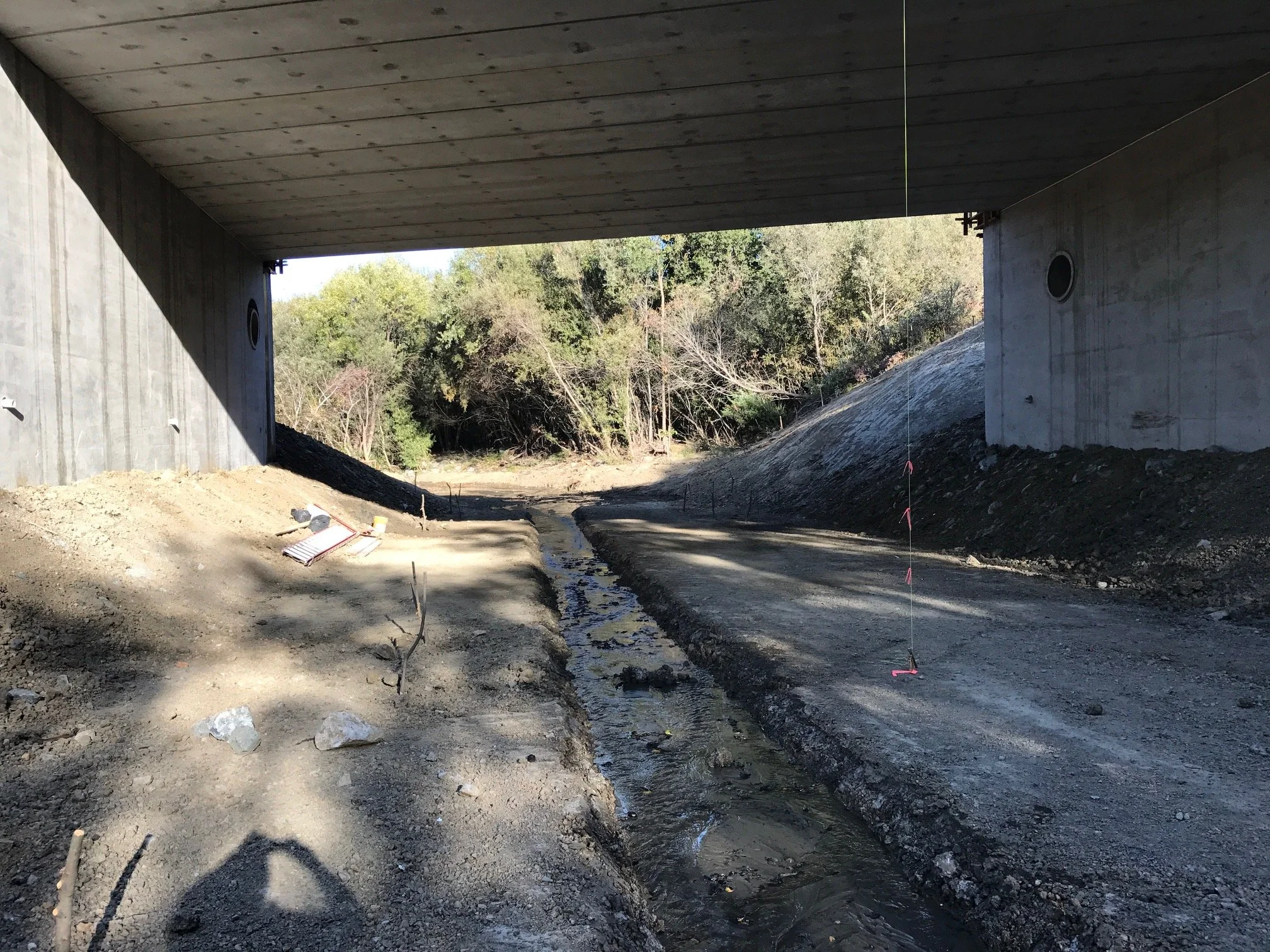
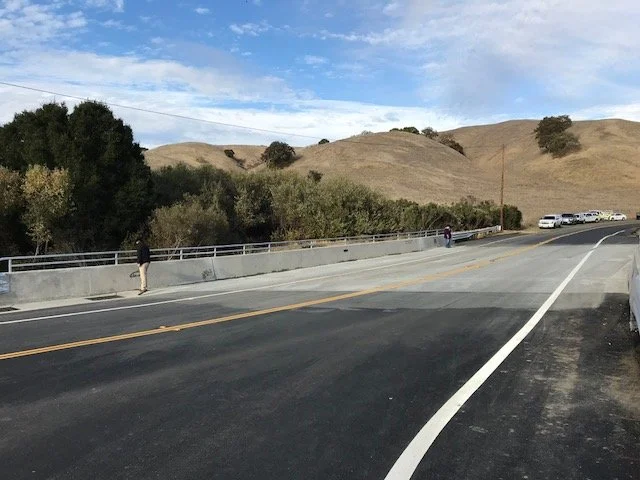
The 50 foot prefabricated bridge was delivered from Texas via flatbed truck. EBMUD crane operators installed the bridge with a rented 75 ton crane. The bridge segments luckily fit on the abutments with less than 2 inches on each side for clearance.
The bridge was bolted together and EBMUD welders welded the bridge to the bearing plates that sat on the concrete abutments. 180 tons of gravel was imported for the bridge and roadway.
EBMUD rangers and biologists installed erosion control measures at the site and planted 16 trees at the site and over 100 willow stakes along the wetted channel.
With the completion of this fish passage project steelhead now have access to all the quality habitat for spawning and rearing upstream in Pinole Creek.